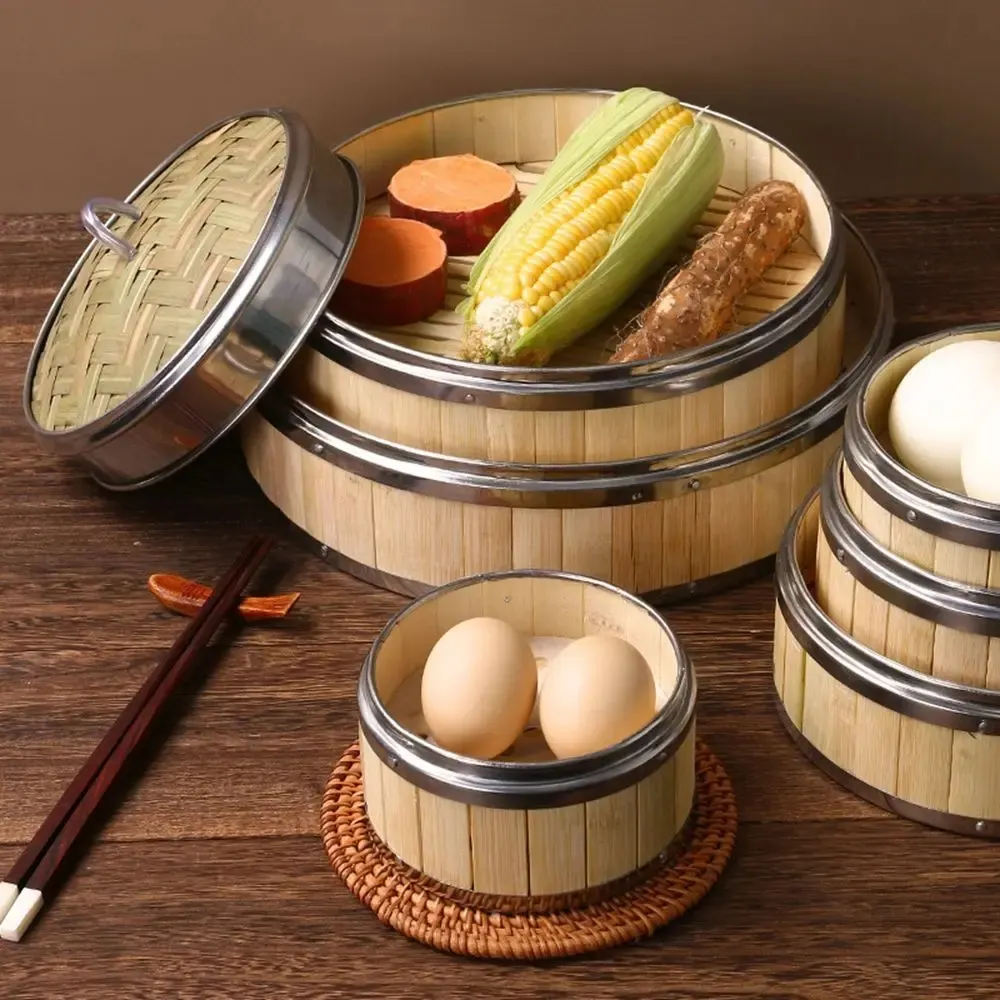
10 Inch Bamboo Steamer: What It Holds and Which Pot It Fits
Ten inch is the size most dim sum kitchens settle on, and one of the sizes we ship most of. It is also the size people buy by mistake. The number on the listing rarely matches what the basket measures.
Here is what ten inch actually means, what fits in one tier, and which pots it will and will not sit on.
What 10 inch actually measures
A ten inch bamboo steamer is about 25 cm across at the outside of the rim, and about 23 cm across on the inside, where the food actually goes.
The inch number is a trade convention, not a measurement anyone checks with a ruler. Two suppliers can both sell a ten inch basket and differ by half a centimetre.
Measure the basket you already own at the outer rim if you are matching it, and measure the inside if you are working out how much food fits. The two numbers are not interchangeable, and retailers usually quote the larger one.
What one tier holds
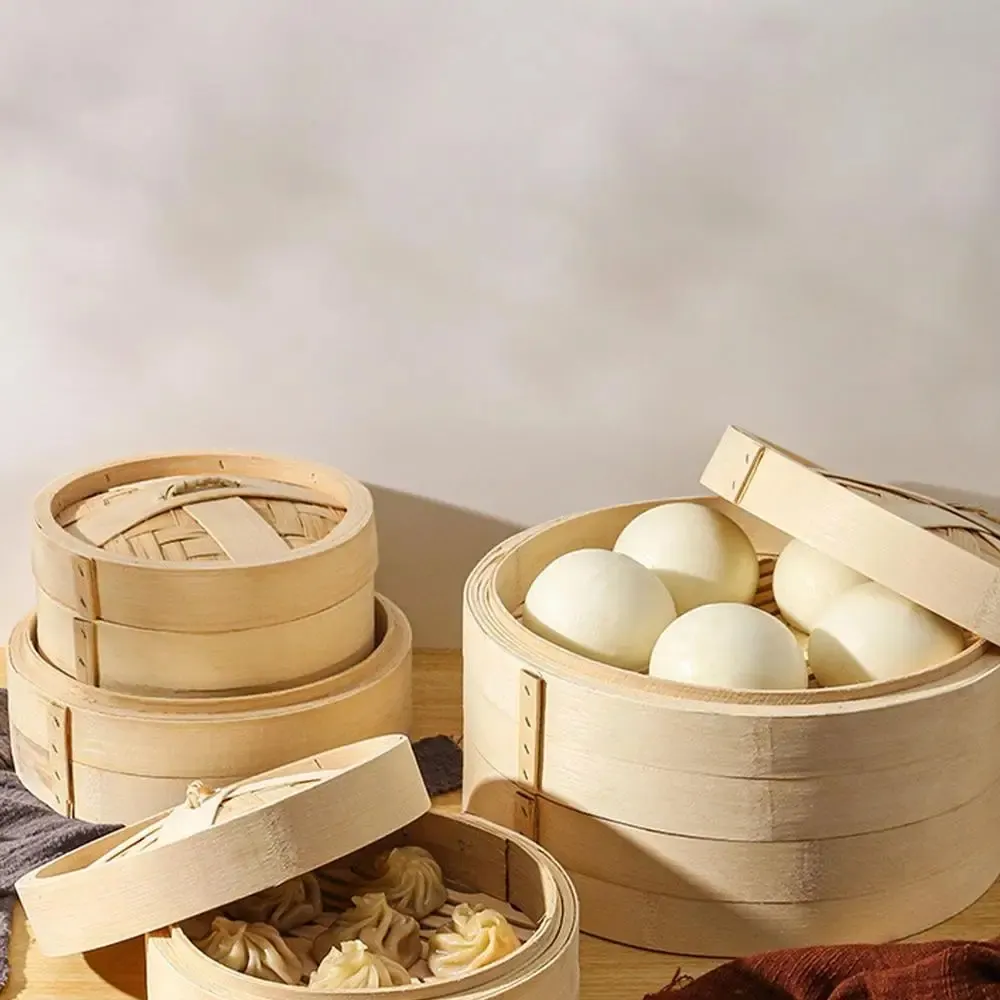
A ten inch tier takes 15 dumplings laid flat without touching. That number is what most takeaway orders are built around, and it is why ten inch became the commercial default rather than eight.
Four to six bao buns fit comfortably, depending on how much they have proofed. A tier packed with six fully proofed buns has no room left for steam to move, and the tops come out pale.
A whole fish needs about 30 cm of clear diagonal, which a ten inch basket does not have. Either buy twelve inch for fish or cut the head and tail off, which is what most home cooks end up doing.
Anything larger than a dumpling needs its own arithmetic. A tier holds what it holds, and the answer changes with the size of the item rather than the diameter of the basket.
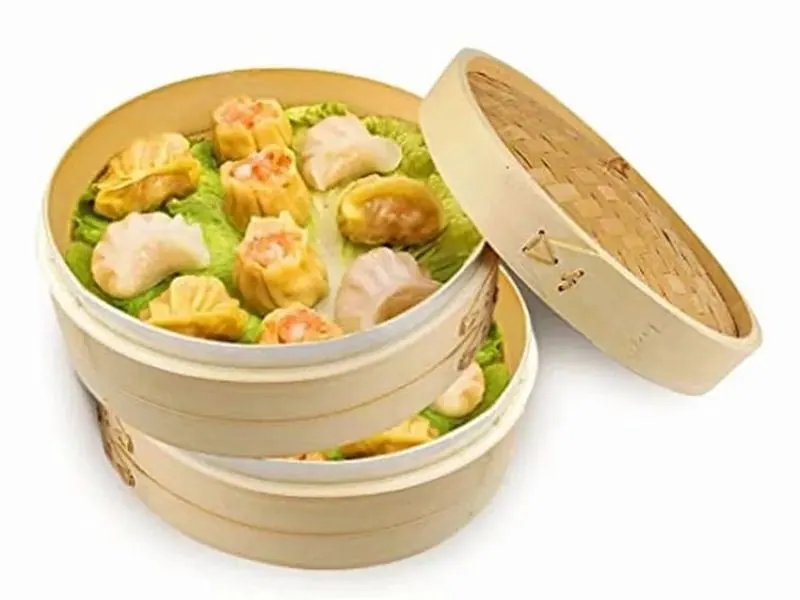
Two tiers is the standard, three is the limit
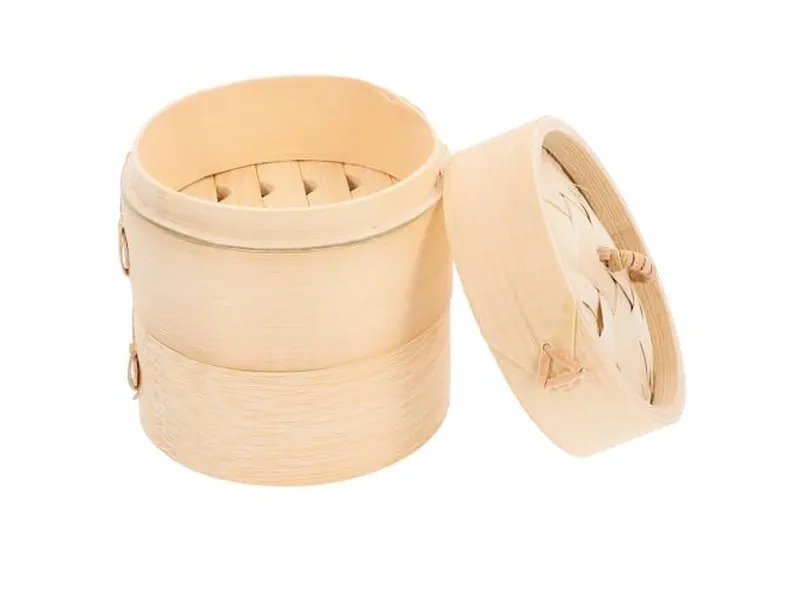
Ten inch baskets are usually sold as a two tier set: two rings plus a lid. That is the configuration most kitchens run, and it is the one that fits under a normal extractor hood.
A third ring adds capacity, not speed. The stack gets taller, the top tier runs cooler, and you have to lift more off the pot every time you check the bottom one.
For a home kitchen, two tiers over a decent pot beats three tiers over a shallow one. For a dim sum service, three or four is normal, but those kitchens are also running a much larger water surface and a much stronger burner.
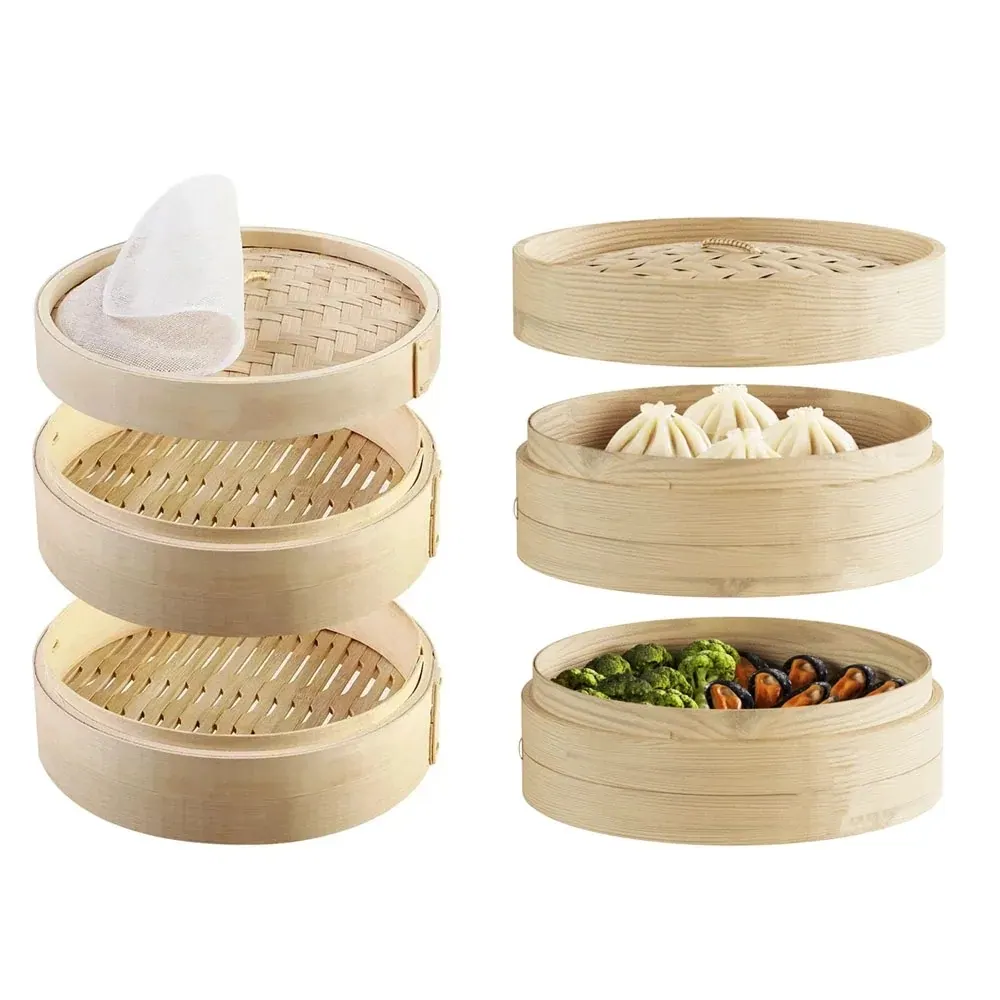
Which pot it fits
A ten inch basket wants a pot with an inner diameter of roughly 26 to 28 cm. That is a standard stock pot, and it is also the size of most woks once a ring is in place.
If the basket is much narrower than the pot, steam escapes around the outside and the cook is slow and uneven. If it is wider, it will not sit at all, and you will end up balancing it on the rim, which is how baskets fall.
A wok ring solves the wok case cheaply. It gives the basket a flat seat above the water instead of letting it tilt into the curve.
Depth matters as much as width. The pot has to hold an inch of water and still leave clearance between the surface and the base of the basket. A wide sauté pan can measure correctly and still be too shallow for a two tier stack.
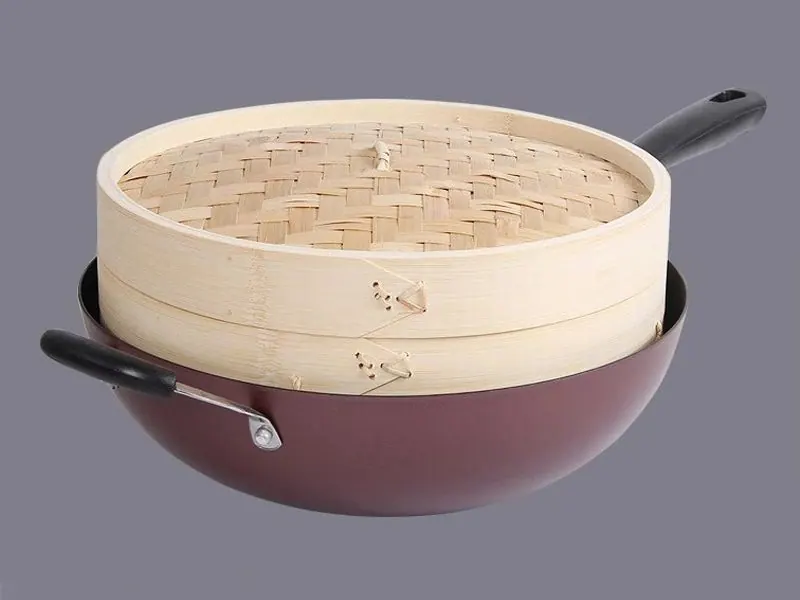
Height, which people forget to check
A two tier ten inch set with the lid on stands about 20 cm tall. Add a third ring and you are another ring height taller again.
That matters in two places: under an extractor hood, and under a wall cabinet. A stack that fits the pot but not the space above it is a stack that gets used once.
Measure the clearance before you buy the third ring. It is the most common reason a three tier set ends up stored as a two tier set.
Ten inch against eight inch
Eight inch is 20 cm, and it feeds one or two people. Ten inch is 25 cm, and the difference in usable area is not 25 percent, it is about 56 percent, because area scales with the square of the diameter.
That is why the jump from eight to ten feels bigger than the number suggests. You are not gaining a little more room, you are gaining half a tier again.
Eight inch still makes sense for a single person, a small kitchen, or a steamer that only ever does a plate of greens. Ten inch makes sense the moment you are feeding three people or selling food.
None of that arithmetic argues for buying small first. If you are unsure, ten inch is the safer default, because it does everything the eight does and more.
Weight, loaded and empty
An empty ten inch basket weighs very little, which is part of the appeal compared with stainless steel. A loaded two tier stack with a full pot of water is a different object entirely, and it is the one you carry to the sink.
Lift a full stack by the bottom ring, not the top. The joints between rings are not designed to carry the whole stack, and a stack carried by its lid is a stack that separates over the floor.
Empty, a two tier set moves with one hand. Filled, it wants two hands and a clear path to the sink.
Ten inch or twelve inch
Twelve inch is 30 cm, and it exists for whole fish, large batches of bao, and stalls that need volume rather than precision.
The trade is space against steam. A twelve inch basket over a ten inch pot does nothing useful, because steam escapes around the gap instead of going through the food. The pot has to grow with the basket.
Most domestic hobs cannot drive a pot wide enough to seat twelve inch properly. For a home kitchen, twelve inch is a restaurant size. Ten inch covers nearly everything a household cooks and still fits under an extractor hood.
Packing, for buyers rather than cooks
A ten inch two tier set is the unit that ships most often, and it is the unit that suffers most in transit when it is packed loosely.
Rings stacked flat with a cardboard disc between each one survive a container. Rings nested without dividers arrive with cracked rims, because the whole stack shifts together and the top ring takes the load.
A carton holds 8 sets, and that number decides your freight cost per unit far more than the basket price does.
Ask for carton dimensions before you quote anything. The same ten inch set packed tight and packed with air are different products at the same FOB.
What to check on a ten inch basket
Ring height consistency first. Ten inch sets are often assembled from stock made in different batches, and a 3 mm difference in ring height is enough to make the stack rock.
A European distributor raised exactly this with us after a delivery. The rings seated, but not firmly, so the stack moved whenever a full basket came off the pot.
Nothing was wrong with the bamboo. The rings were simply not identical, and that is the failure mode worth checking before you buy a set rather than a single ring.
A lid that sits inside the top rim rather than on top of it. A lid that rests on the rim lets steam out around the whole circumference.
Pins flush with the rim. A pin standing proud catches a cloth and pulls out within weeks.
The binding at the rim, doubled on a good set. That edge takes the load every time a basket comes off the pot, and an under-bound rim goes soft before the body does.
Even gaps in the base. Wide patches let dough bulge through and tear on the way out.
When ten inch is the wrong size
It is too big for one person cooking one portion, and too small for a whole fish or a large batch of bao.
It is also the wrong choice if your pot is smaller than 26 cm, which is common in apartments with two-burner hobs. In that case buy an eight inch basket that fits, rather than a ten inch basket that hovers.
Everything else, from dumplings for four to a dim sum service running four tiers, ten inch handles.
If you are buying these by the container, our ten inch bamboo steamer baskets are built to one diameter and one ring height, so a stack of five seats flat and the second shipment matches the first.
Samples go out before any bulk order.