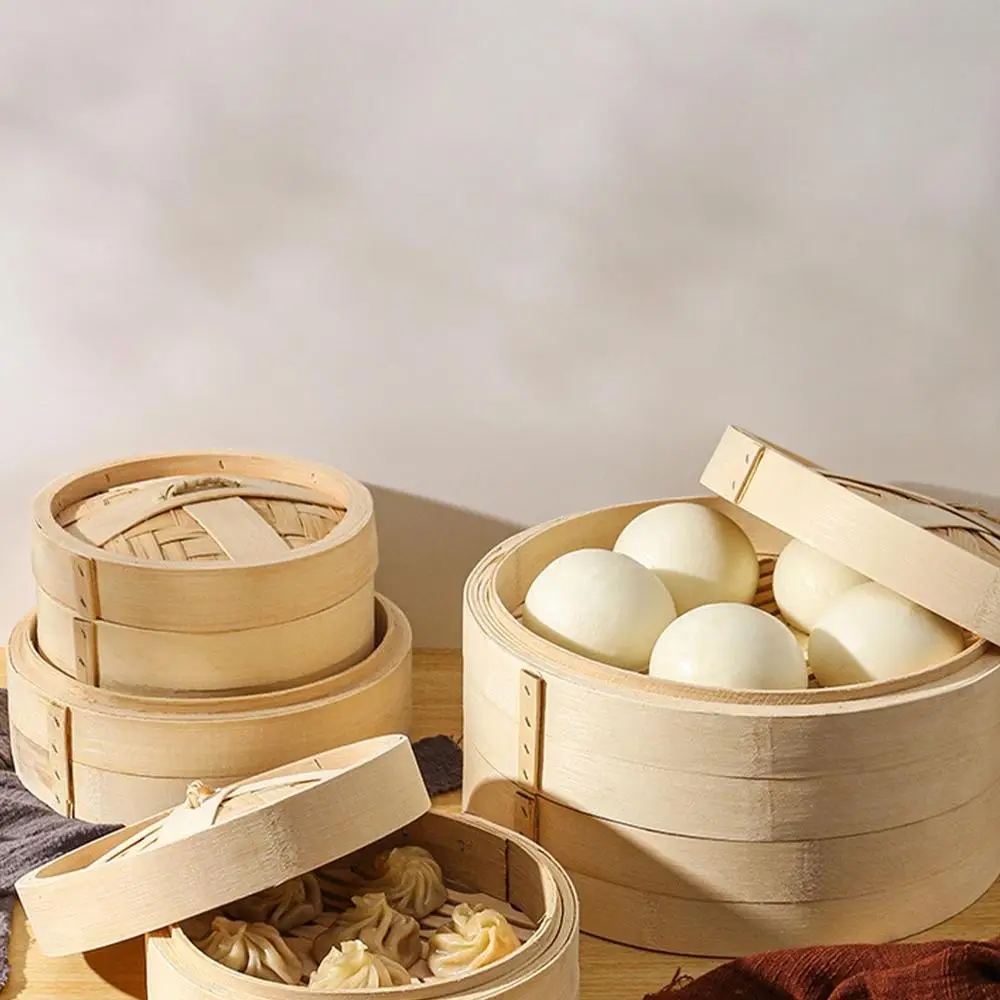
How to Use a Bamboo Steamer Basket: Water, Heat and Timing
Most first attempts go wrong in the same three places. Too much water, too much heat, and the lid coming off before the buns have had time to set.
None of those are difficult to fix. They are just not obvious from the basket itself, which arrives as a stack of hoops with nothing written on it.
What follows is the sequence we hand to home cooks and to kitchens opening a new steam station.
It assumes the basket fits the pot. If it does not, sort the sizing and pot matching first. No technique saves a basket that will not sit level.
What you need before the first batch
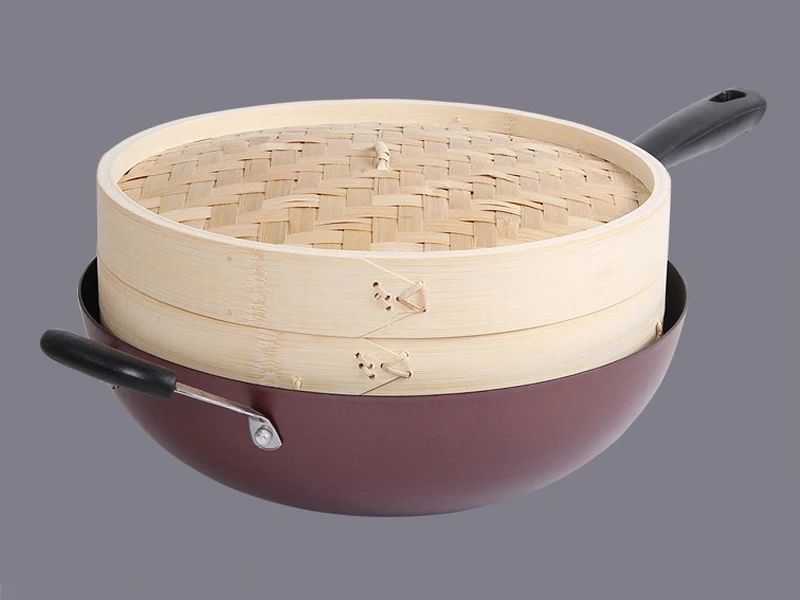
A pot deep enough that the basket sits above the water rather than in it. A wok with a ring works. So does a wide sauté pan, as long as the basket drops inside the rim.
The lid that came with the basket. Not the pot lid. A pot lid is wider than the basket, it collects condensation, and it drops that condensation onto the food.
A timer. Steam looks identical at two minutes and at eight.
Tongs or chopsticks for lifting, and a folded towel, because the rim gets hot enough to sting.
Something to line the base with. Parchment, muslin or a cabbage leaf.
That is the whole kit. None of it is specialist equipment.
Season the basket before the first real batch
A new basket smells of bamboo, and that smell goes into the first thing you cook. It is not harmful, but a custard bun that tastes of fresh cane is not what anyone wanted.
Run the empty basket over boiling water for ten minutes, lid on, then dry it properly. That takes most of the green smell out.
Do not wash a new basket with detergent to speed this up. The strip absorbs it, and then the basket smells of soap instead, which is worse and lasts longer.
Setup: water below the basket, never touching it
Fill the pot with about an inch of water (2.5 cm). Two fingers deep is the old description and it is close enough.
Bring it to a boil with the basket off. A full head of steam recovers faster after you open the lid, and cold water with cold food gives a long, pale, disappointing first batch.
Then set the basket on, confirm it sits level, and only then start loading. Loading a basket that is already sitting over steam means burned fingers and a stack that shifts.
If the basket will not sit on your pot
Most people buy the basket first and discover the mismatch at home. There are three ways out, and only one of them is worth doing.
A wok ring is the clean fix. It is a metal collar that sits on the wok's rim and gives the basket a flat seat above the water. Cheap, and it solves the wobble completely.
A steamer rack inside a wider pot is the second option. The basket sits on the rack rather than in the pot mouth, which works as long as the basket still fits under the lid of the pot.
Standing the basket on an inverted bowl is the third, and it is the one that goes wrong. Bowls tip, steam finds the gap, and the whole arrangement collapses at the worst moment.
The honest answer is that the basket should match the pot mouth within a size or two. If it is far off, buy a different basket rather than inventing a scaffold.
Heat: a simmer beats a rolling boil
Once steam is rising steadily, turn the heat down.
A hard boil throws water against the underside of the base and the basket starts to rattle. It also empties the pot far faster than people expect, and a dry pot scorches bamboo.
What you want is a steady column, not a jet. Hold a hand near the seam for a second. If you can keep it there, the heat is right. If you cannot, turn it down.
Commercial burners run hotter than anything domestic. On a wok range, the lowest setting is usually plenty.
Loading the tiers so everything finishes together
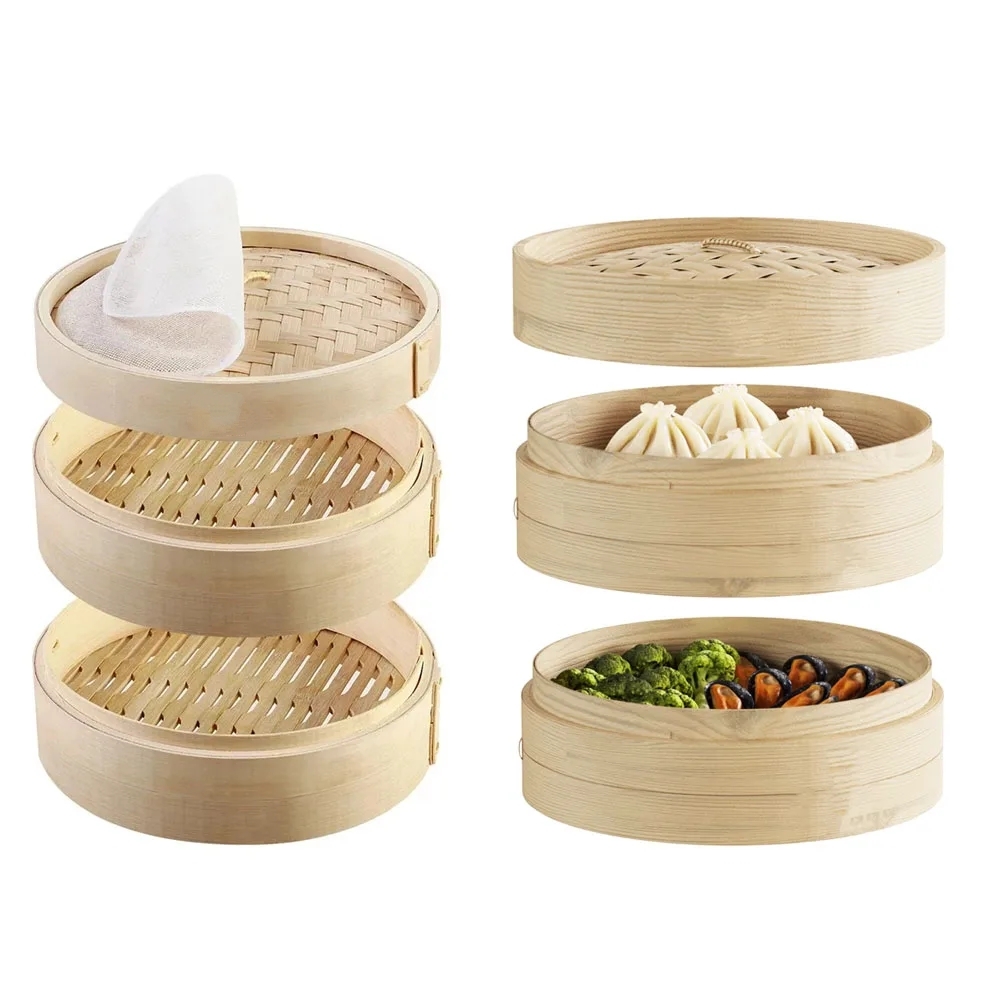
The bottom tier is the hottest. Put the item that needs the longest time down there: frozen dumplings, sweet potato, sticky rice, a whole fish.
The top tier runs cooler, so that is where greens, prawns and anything that needs three or four minutes belong.
Leave gaps between pieces. Steam has to move around the food, not push through a solid block of it.
Do not stack five tiers just because the basket came with five. Two or three is what most pots can actually drive. Beyond that, the top trays cook slowly while the bottom ones overcook, and you spend the evening swapping trays.
Check that each ring seats before adding the next. A stack that rocks is a stack that leaks, and the leak always shows up on the plate.
The lid stays on
Every time you lift the lid you dump the steam and effectively restart the clock. Buns collapse. Dumpling skins go from glossy to dull within seconds.
If you must look, lift one edge for a moment and put it straight back. Do not take the lid off and hold it while you decide.
At the end, turn the heat off and wait a minute before opening. The surface sets in that minute, and the batch survives the temperature drop far better than when the lid comes off the instant the timer sounds.
Lift the lid away from you, on a slant. Condensation then runs down the inside and off the edge instead of landing on the food.
Liners: what goes under the food
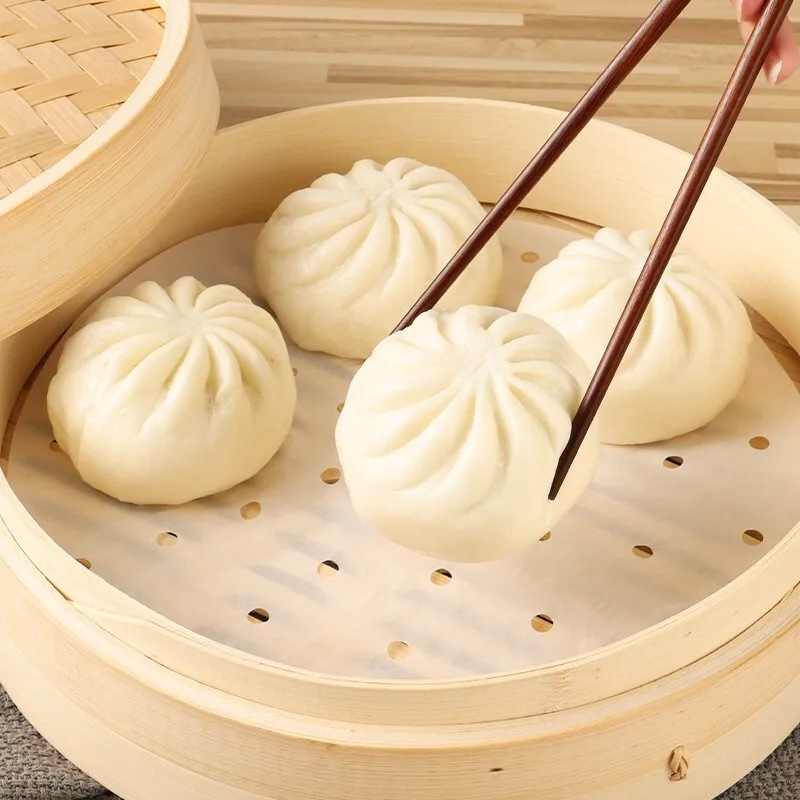
Nothing sticky should sit directly on the slats. Dumplings weld themselves to bamboo and the skin tears when you lift them.
Parchment works if you punch holes in it. A solid sheet traps steam underneath, the base sits in water, and the result is a pale, gummy bottom. Fold it, cut a few slits, done.
Muslin or cheesecloth is the traditional answer. Wet it, wring it out, lay it flat. Dry cloth grabs the food instead of releasing it.
Cabbage leaves and corn husks are the oldest option, and the only one you can eat afterwards. They add a little aroma, which is either a feature or a problem depending on what sits next to them.
Never oil the bamboo itself as a release agent. It soaks in, turns rancid, and the smell stays for months.
Frozen, chilled or fresh
Frozen dumplings go in straight from the freezer. Thawing them first is the most common mistake, because a thawed wrapper is wet, soft, and tears the moment it meets steam.
Add two to three minutes to the fresh timing and leave a little more space between pieces, since frozen food releases water as it heats.
Chilled food, straight from the fridge, sits between the two. Give it an extra minute and do not preheat the basket with it inside.
Room temperature dough is the fastest case, and the one that punishes an early lid lift hardest. The colder the food, the longer the window before a collapse becomes permanent.
Timings that hold
These are starting points, not guarantees. Wrapper thickness, filling temperature and how cold the food is all move the number.
Fresh dumplings take six to eight minutes. Frozen ones take ten to twelve.
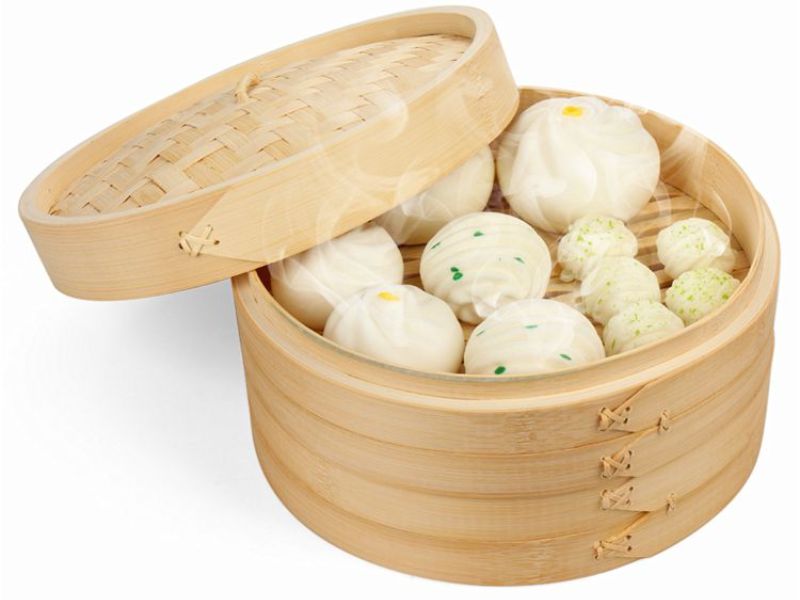
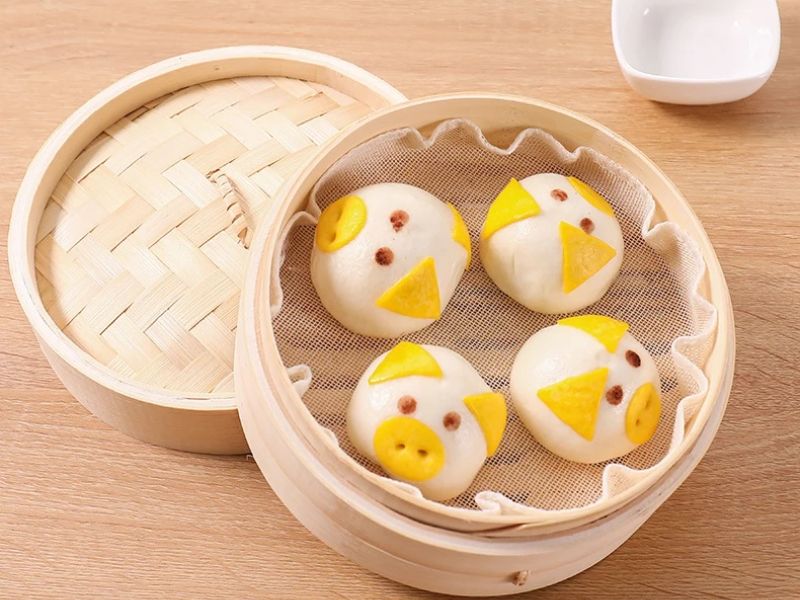
Bao and other yeast buns, already proofed, take ten to twelve. If they still need a second rise, give them five minutes at low heat before the clock starts.
Vegetables take three to five. Broccoli and cauliflower at the top of that range, leafy greens at the bottom.
Fish fillets take five to six. A whole fish in a twelve inch basket takes ten to twelve. Prawns take three to four and go grey the moment they are done.
Sticky rice, soaked first, takes twenty five to thirty.
Eggs from the fridge take ten to twelve for a set yolk.
One ten inch tier holds 15 dumplings laid flat without touching, which is the number that decides how many tiers a service actually needs.
Calibrate once on your own stove. Steam a single cheap batch, keep the number that worked, and write it inside the basket lid in pencil. That one number beats every table, including this one.
Read the steam, not the clock
A basket working properly sends steam evenly from the whole seam. One side venting hard while the other stays quiet means the stack is not level, or a ring is not seated.
That reading is more useful than the timer, especially on a stove you do not know. Fix the seat first, then argue with the clock.
Questions that come up before the first batch
Does the water need to be boiling before the basket goes on? Yes. Cold water means a slow ramp, and during that ramp the dough sits in warm damp air, which is exactly the condition that makes a bun slump. Get steam first, then load.
Can I use it on an induction hob? Yes, as long as the pot is induction rated. The basket does not care what heats the water, only that steam arrives at a steady rate.
Can I put a plate inside the basket? Yes, for anything that would fall through the slats. Use a shallow one so steam still moves around it, and expect that food to cook slower.
Will it work on top of an Instant Pot? Only if the basket is narrower than the pot's inner diameter and the pressure is off. It is a steamer, not a pressure vessel, and a sealed pot under a bamboo basket does nothing useful.
Do I need to soak the basket before use? No. That advice comes from wooden steamers, which are built differently. Soaking a bamboo basket loosens the binding at the rim and invites mold.
How long does a basket last? Two to three years with proper drying, far less in daily commercial service. The failure is almost always storage rather than the bamboo itself.
Five failures and what actually caused them
Collapsed or wrinkled buns. The lid came off early, or a hard boil dropped condensation onto the skin before it set.
Torn dumplings. No liner, or a boil violent enough to throw the dumplings against each other.
Sticky bases. Water touching the bottom tier, or parchment with no holes in it.
A pale top tier. Steam escaping at a joint, almost always because the rings do not seat.
Bamboo smell in the food. A new basket that was never run empty first, or a basket that has already steamed fish.
Reheating and holding
Reheating in a steamer takes three to five minutes and beats a microwave on texture every time. Bread and buns come back soft rather than rubbery.
Holding is fine for about ten minutes with the heat off and the lid on. Longer than that, the crust softens and the batch starts to look tired.
Cooking for four instead of two
A single tier and a small pot will feed two people comfortably. Four is where the arithmetic changes, and not in the way most people expect.
Do not solve it by adding tiers. Two tiers over a proper pot beat four tiers over a shallow one, because the steam has to be generated before it can be distributed.
Load the slow items first, set the timer, and only then prepare the quick ones. Everything landing on the table at the same moment is the whole point of a steamer, and it only happens if you stagger the loading rather than the cooking.
Serve straight from the basket if you can. The drop from steamer to plate to table costs more heat than the extra washing up saves.
Running it at volume
Two sets of baskets, not one tall stack. While one sits on the pot, the other is being loaded or washed. That rotation is what keeps a service moving.
Keep a second pot of hot water ready. Topping up a steaming pot with cold water kills the recovery time and stalls the whole line.
Clean up while it is still warm
Hot water, soft brush, no detergent, no soaking. Stand the rings up to dry with air moving through them.
That is the whole routine. The longer version, including what to do when mold appears, is in our care notes.
If you are fitting out a steam station rather than a home kitchen, our bamboo steamer basket range is built to one diameter and one rim height, so the second batch sits exactly like the first.